

By Zareth Ramos Cervantes, undergraduate Social Research and Public Policy major, NYU Abu Dhabi
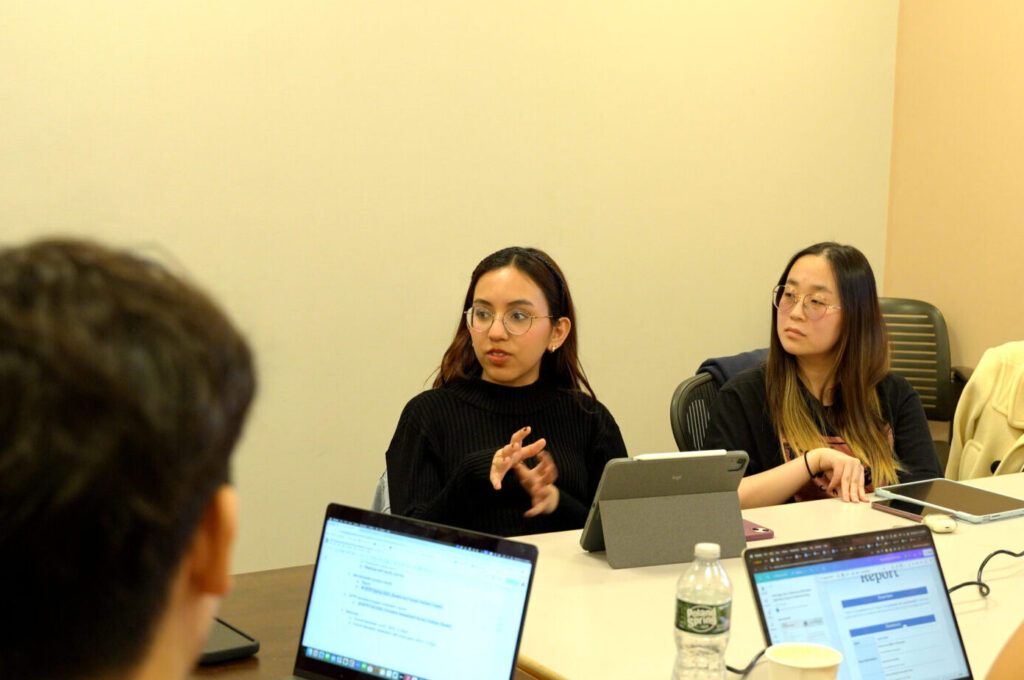
In spring of 2025, I joined the Student-Faculty Partners Program (SFPP), offered through NYU’s Center for Teaching and Learning, while taking a semester away from NYU Abu Dhabi to study in New York City. As a student partner, I collaborated with a professor in a dynamic partnership of reflection and growth centered on teaching and learning. The program shifted our perspective to consider aspects of teaching beyond content, grading, or rubrics, and towards the actual classroom experience and engagement.
Although my major is Social Research and Public Policy, I was partnered with Professor Fidelindo Lim in Critical Care Nursing at Rory Meyers College of Nursing, an advanced elective on complex health care issues that nurses encounter. It was a class I had no previous experience or knowledge about, allowing me to focus on how rather than what he was teaching with unbiased eyes.
Through weekly SFPP training, I learned how to observe, take detailed notes, identify what was working, and facilitate discussion with my faculty partner while planning realistic changes to the course throughout the semester. Each week I conducted class observations and a student survey, then met with my partner to discuss strengths and gaps, analyze student input, and brainstorm strategies to enhance the learning environment. We also collected data through a mid-semester survey and facilitated a final focus group to close with a feedback report.
My favorite part of the program was the development of my partnership. Following advice from a former mentor back in Abu Dhabi, I started to exchange weekly emails with Professor Lim. I wanted an extra opportunity to reflect on what I was learning, and I also wanted to form a strong connection with Professor Lim in order to learn the most from him that I could. Our exchanges circled around his latest blogs for the American Nurse journal, our favorite articles on education, and our shared interest in what we called a “pedagogy of kindness.” We also reflected on the proceeding week and encouraged each other to keep an open mind about the changes we were implementing in the course.
It requires a lot of character and humility to be able to take feedback from a class you have been teaching for years as a widely recognized scholar. Professor Lim is an erudite educator; he is disciplined, proactive, and truly outstanding in his field. These qualities alone make him exceptional, but, on top of them, he is also a genuinely kind person who empathizes with students in a way that is hard to forget. I mentioned to him how blown away I was from the first classes to see such difficult topics being delivered with such grace and empathy. Even if I couldn’t understand the material he was teaching, I could recognize the level of rigor necessary to keep up with the pace of the class.
Professor Lim incorporated many small gestures in his teaching that nevertheless had a profound impact on students. He offered bananas to students for an energy boost (especially for those who had been commuting since dawn to get to class), he made sure that his microphone was on so everyone could hear him, and he learned every single one of his students’ names. I mentioned that these small acts were powerful because they brought a sense of humanity to a classroom where exigency and pressure were constant. He responded, “Yes, I do subscribe to the pedagogy of kindness. With all that is going on in the world, it is easy to lose track of what matters in human interactions.” It was at that moment that I realized our priorities in the classroom were synchronized and that something special could come out of our partnership.
As I got to know Professor Lim, I learned what he values most as a teacher is nurturing love of learning among his students. He strives to boost their intrinsic motivation, and is concerned about what he sees as a decline in interest in reading and learning. Too many students, he has written, view grades as more important than learning.
To challenge this current trend, we tried to make learning engaging again through genuine care for the students’ wellbeing. We incorporated breaks for physical exercise during class to accommodate attention spans; check-in surveys where students could inform the professor what they found difficult; open office hours; and a mid-semester survey as well as an end-of-term focus group to gather student feedback.
After hearing from students, we used their recommendations right away. For example, a student suggested using Kahoot!, which became one of the greatest interventions we implemented. Students had commented that exams and quizzes had been very anxiety-inducing in the course. Kahoot! gave the professor the chance to assess comprehension in a way that did not feel like a stressful test or quiz and did not contribute to grade-dependency. Such changes aren’t always easy in the middle of the semester, but this is how he showed he cared for the students.
Kindness shaped the air in Professor Lim’s classroom. It softened the space. It made students want to show up, speak up, and make the professor proud. And that, more than any rubric or metric, was what made the class feel truly human. Today’s classrooms show a growing gap in the communication between students and professors. It’s hard for us to read intentions. Why does a professor change something in the rubric, ask for feedback, or stick to a method that doesn’t seem to work? Why does a student miss class, fail an exam, or ask for an extension? As a student partner, my job was to build a bridge of communication between the students and the professor. Something as simple as giving them a space to feel seen and appreciated.
There were many outcomes from this partnership: clearer communication between students and professor, timely adjustments to classroom activities, a deeper sense of student voice, and a more intentional teaching practice. It was all grounded in the professor’s deep mission to create an environment where love for learning is nurtured, which I’m extremely honoured to have been part of. In Professor Lim’s class, that space of exchange created a level of empathy that felt like a collective push, a willingness from everyone to give a little more, and, in this case, to be better learners, better listeners, and ultimately, better future nurses.
*To learn more about the Student Faculty Partners Program, attend the upcoming TeachTalk on Course Design Through the Student Lens: Lessons from the Student Faculty Partners Program, Nov. 13, 2025 (REGISTER).